February 20, 2026
Logistics is evolving rapidly with technology. Companies are adopting automated logistics systems to move goods faster, reduce mistakes, and lower costs. Manual processes often slow down operations and make supply chains less reliable.
Automation in logistics allows businesses to manage shipments, inventory, and deliveries more efficiently. With logistics automation software, companies can monitor every step in real-time and make decisions quickly without relying heavily on manual work.
In this blog, we will explain what logistics automation is, why it is important, and how businesses can start using it. We will also look at common challenges in supply chains and how automation can solve them effectively.
Logistics automation is the use of technology to handle tasks in the supply chain without needing constant human intervention. It covers processes like order processing, warehouse management, shipment tracking, and delivery planning.
Automated logistics systems help companies reduce manual errors, save time, and improve overall efficiency. For example, automated sorting systems in warehouses can organize products faster than people, and real-time tracking tools keep shipments on schedule.
By using automation in logistics, businesses can handle larger volumes, respond quickly to changes, and provide better service to customers. It makes the supply chain more reliable and easier to manage.
Automation in logistics plays a key role in making supply chains faster and more reliable. It helps companies handle large volumes of orders without delays and reduces mistakes that often happen with manual processes.
With automated logistics systems, businesses can monitor shipments, manage inventory, and plan deliveries more efficiently. This visibility helps companies respond quickly to changes in demand or unexpected disruptions.
Logistics automation solutions also improve customer satisfaction. Faster deliveries, accurate tracking, and fewer errors mean customers get their orders on time and in good condition. For modern supply chains, automation is no longer optional; it is essential for staying competitive.
Implementing automation in logistics can bring major improvements, but it also comes with challenges. Below are the main challenges in the implementation of automation.
Setting up automated logistics systems requires a significant financial investment. Costs include buying hardware, software licenses, and installing equipment like conveyors, robots, or automated sorting systems.
Many companies already use traditional or older systems for managing warehouses, shipments, and inventory. Introducing new logistics automation solutions can create compatibility issues..
Employees need to understand how to operate the new automated systems. Without proper training, mistakes can happen, reducing efficiency and increasing errors. Companies may need to invest in ongoing training programs to ensure staff can fully utilize the automation tools.
Automation in logistics depends heavily on accurate and up-to-date data. Incorrect or incomplete information can cause issues like wrong shipments, misplaced inventory, or delayed deliveries. Companies must have strong data management practices before implementing automation.
Automated logistics systems require regular maintenance, software updates, and technical support. Any downtime due to technical issues can disrupt the supply chain, causing delays and potential financial losses. Planning for maintenance and support is essential to keep the system running smoothly.
Automation in logistics brings significant advantages for businesses. It improves speed, accuracy, and efficiency while reducing costs and errors.
Automated logistics systems reduce human errors in tasks like order processing, inventory management, and shipment tracking. This ensures that orders are fulfilled correctly and on time.
Automation speeds up warehouse tasks such as sorting, packing, and loading. Shipments can be prepared and dispatched faster, meeting customer expectations for timely deliveries.
By reducing manual labor and minimizing errors, logistics automation solutions help businesses save on labor costs and avoid costly mistakes in the supply chain.
Automation allows real-time tracking of stock levels. Companies can maintain optimal inventory, avoid overstocking or stockouts, and plan replenishments efficiently.
Automated logistics systems make it easier for businesses to handle larger volumes. As demand grows, companies can scale operations without compromising efficiency.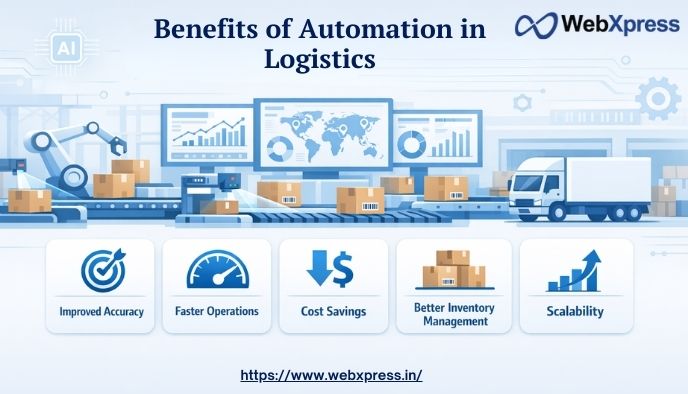
Supply chains face many challenges like delays, errors, and high operational costs. Logistics automation helps address these problems effectively.
Automated logistics systems reduce human errors in picking, packing, and shipping. This ensures that orders are delivered accurately and on time.
Automation also improves communication and visibility across the supply chain. Companies can track shipments in real-time, manage inventory better, and respond quickly to disruptions.
By using logistics automation solutions, businesses can lower labor costs, speed up processes, and provide consistent service to customers. Overall, automation helps companies handle challenges efficiently while keeping operations smooth.
Several technologies are essential for logistics automation. They help businesses improve efficiency, reduce errors, and manage supply chains effectively.
Warehouse Management Systems are software tools that organize and control warehouse operations. WMS tracks inventory in real-time, manages stock locations, and helps staff pick and pack orders efficiently. It reduces errors, speeds up warehouse processes, and ensures products are ready for shipment on time.
Automated Guided Vehicles are driverless machines used to transport goods within warehouses or factories. AGVs can move products from storage areas to packing stations or loading docks without human intervention. This increases safety, reduces labor costs, and speeds up the movement of goods.
Robots handle repetitive and time-consuming tasks such as picking items from shelves, packing products, and sorting orders. Automated sorting systems can organize hundreds or thousands of items quickly and accurately. This frees employees to focus on more strategic tasks and improves overall operational efficiency.
IoT devices connect equipment, vehicles, and inventory across the supply chain. Sensors can track the location of shipments, monitor warehouse conditions, and provide real-time updates. This visibility allows companies to respond quickly to delays, avoid damage, and make informed decisions.
AI and machine learning analyze large amounts of supply chain data to identify patterns and predict future trends. These technologies optimize delivery routes, forecast demand, and help managers make better decisions. Over time, AI can continuously improve efficiency and reduce costs in logistics operations.
Before implementing automation in logistics, companies need careful planning to ensure a smooth transition. The first step is understanding business needs and identifying areas where automation can make the most impact, such as reducing delays, errors, or high labor costs. Budget is another key factor. Automation requires investment in hardware, software, and training, so calculating the return on investment (ROI) is important to ensure the benefits outweigh the costs.
Integration with existing systems is also essential. New logistics automation solutions should work seamlessly with current software and processes to avoid disruptions. Employee training plays a big role in successful implementation. Staff need guidance to operate automated systems effectively, or the benefits of automation may be limited.
Accurate data is another critical factor. Automation depends on correct and updated information for inventory, shipments, and orders. Companies must organize and maintain data properly before adopting automation. Finally, scalability should be considered. Choosing systems that can grow with the business ensures that higher volumes and expanded operations can be handled without needing a complete system overhaul.
Implementing logistics automation successfully requires careful planning and execution. Following best practices helps businesses avoid common pitfalls, maximize efficiency, and achieve the full benefits of automated logistics systems.
Start by defining specific objectives for your logistics automation. Identify key areas for improvement, such as reducing errors, speeding up deliveries, lowering operational costs, or improving inventory accuracy. Clear goals help guide the implementation, measure progress, and ensure that automation aligns with business priorities.
Engage employees from the beginning and provide proper training. Staff who understand how the system works are more likely to use it effectively. Early involvement also reduces resistance to change, encourages feedback, and ensures smoother adoption of automation throughout the organization.
Choose automation solutions that integrate seamlessly with your existing software and processes. Poor integration can cause delays, errors, and data inconsistencies. Proper integration ensures real-time data flow across the supply chain, allowing inventory, shipments, and orders to be tracked accurately.
After implementation, track key metrics such as delivery times, inventory accuracy, order fulfillment rates, and overall productivity. Continuous monitoring helps identify bottlenecks, detect errors early, and make informed decisions to optimize operations.
Automation is not a one-time setup. Regularly reviewing the system and making necessary adjustments keeps operations efficient and up to date. Businesses should update workflows, refine processes, and address emerging issues to maintain optimal performance.
Automated logistics systems require ongoing maintenance, software updates, and technical support. Scheduling regular checks and having a support plan in place minimizes downtime, prevents system failures, and ensures consistent supply chain performance.
Logistics automation is set to transform supply chains in the coming years. Companies are increasingly adopting AI in logistics to analyze data, predict demand, and optimize delivery routes, while IoT devices and machine learning help reduce operational costs. Technologies like autonomous vehicles and drones may also become common for moving goods efficiently.
Automation solutions will become more integrated, connecting warehouses, transportation, suppliers, and customers in a single, seamless system. This real-time visibility allows businesses to respond quickly to delays, track shipments accurately, and make smarter decisions across the supply chain.
Sustainability will play an important role in the future of logistics. Automation can help reduce fuel consumption, optimize routes, and lower carbon emissions, creating supply chains that are faster, efficient, and environmentally friendly. Companies that adopt automation today will gain efficiency, reliability, and a competitive advantage in the years ahead.
WebXpress offers comprehensive logistics automation solutions designed to meet the needs of modern supply chains. Their systems cover everything from inventory management and order processing to shipment tracking, making operations faster and more accurate.
With years of experience, WebXpress helps businesses integrate logistics systems smoothly with existing processes. They provide ongoing support, training, and system maintenance, ensuring companies can maximize the benefits of automation without disruptions.
By partnering with WebXpress, businesses gain access to advanced technology, real-time visibility, and scalable solutions. This allows companies to reduce costs, improve efficiency, and deliver better service to their customers, making WebXpress a reliable choice for logistics automation.
Warehousing, order processing, inventory management, sorting, packing, and delivery planning are common areas where automation can be applied.
Automation minimizes human errors, speeds up operations, and reduces manual labor, which lowers operational expenses and improves efficiency.
Yes, automated logistics systems are designed to manage high volumes efficiently, ensuring accurate order processing and timely deliveries even during peak periods.
Yes, businesses of all sizes and industries can benefit. Scalable logistics automation solutions allow even small companies to improve efficiency and reduce errors without a complete system overhaul.
Logistics automation is transforming the way businesses manage their supply chains. Automated logistics systems and logistics automation software help companies reduce errors, improve efficiency, and deliver goods faster and more accurately.
By implementing automation, businesses can overcome common supply chain challenges, such as delays, manual errors, and high operational costs. With the right planning, integration, and employee training, automation becomes a valuable tool for modern supply chains.
Partnering with a reliable provider like WebXpress ensures smooth implementation, ongoing support, and access to advanced technology. Companies that adopt logistics automation today can improve performance, customer satisfaction, and stay competitive in the future.
Copyright 2026, WebXpress. All Right Reserved
Design & Developed By