December 20, 2025
The last mile is frequently given the highest priority when talking about visibility in logistics. This is due to the fact that this phase of the delivery process is the most costly and challenging to efficiently manage. At this point, even a minor error has an immediate effect on the clients. Thus, in the last mile, careful planning and ongoing monitoring are crucial.
However, the entire logistics process can go much more smoothly if we use the same strategy for the middle mile. If we want to reduce problems in the later stages, we need to perform accurate tracking in the middle mile and provide that information further along the chain. The first, middle, and last miles are actually interconnected. As a result, having clarity at every stage guarantees that the work is finished more quickly and effectively. We will learn about the middle mile, its significance, and how to become more visible during this phase in this blog.
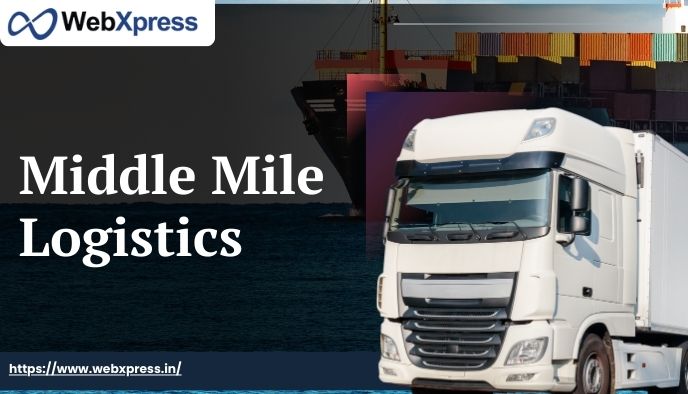
In the middle logistics, before reaching the final customer, items are moved from one place to a number of intermediate centers during the middle mile phase of logistics. This entails transporting products to local hubs, retail locations, or fulfillment centers from suppliers or warehouses. The products are ready for the final delivery at this stage.
The effects are immediately noticeable if planning and collaboration fail at this point. Overall cost increases, some things become unavailable, and goods do not deliver on time. Last-mile delivery also faces challenges in such situations.
On the other hand, better control over the movement of goods is ensured by effective middle mile management. This guarantees that there is enough inventory for later phases and that shops can promptly meet consumer demands.
Last-mile delivery is the last stage of the logistics process, where products are transported from a distribution center to the final consumer. Delivery schedules and customer satisfaction are directly impacted by this stage.
Transporting goods from factories, suppliers, or ports to fulfillment or distribution centers is the focus of middle-mile logistics. Inventory is now sorted, stored, and ready for distribution. Vehicle movement, planned arrival times, and warehouse capacity are all tracked by technology. Middle-mile logistics focuses on transporting goods from factories, suppliers, or ports to fulfillment or distribution centers. Efficient multi-stop route planning is key in this stage, allowing multiple hubs or retail centers to be served efficiently, saving time and reducing costs.
Last-mile logistics finishes the delivery process, while middle-mile logistics guarantees efficient inventory flow and availability. Last-mile performance can be negatively impacted by poor middle-mile planning, but effective coordination between the two phases keeps the supply chain balanced and effective.
Effective middle-mile logistics streamlines not only transportation but the entire supply chain. The benefits listed below help businesses control costs, improve deliveries, and make operations more efficient.
Good middle-mile management reduces unnecessary costs related to goods handling, storage, and transportation. Businesses can achieve more effective distribution at a lower cost through effective route planning and resource utilization, which increases customer satisfaction and profitability.
Transportation routes are streamlined by efficient middle-mile planning. This lowers fuel consumption, manages labor expenses, and ensures more organized overall operations. Additionally, it reduces the impact on the environment.
Delivery times reduce when movement between warehouses and distribution centers is properly coordinated. The distribution process is made faster and more dependable by avoiding unnecessary stops and delays.
The supply chain is more flexible when there is greater visibility in the middle mile. Early detection of delays, bottlenecks, or capacity-related problems is made possible by real-time information, allowing for quick correction.
A more stable last-mile delivery results from effective middle-mile management. Having goods on hand at the correct time and location minimizes final stage disruptions and guarantees quick product delivery to customers.
Businesses that focus on middle-mile operations can provide better service, quicker deliveries, and more precise ETAs. Small and medium-sized businesses can particularly benefit from this by developing an individual market position.
Middle-mile logistics helps in controlling overall distribution costs, especially by significantly reducing last-mile expenses. Since goods are transported directly from factories, ports, or suppliers to fulfillment centers, the distance required for final delivery is reduced. This leads to lower fuel consumption and decreased transportation costs.
Proper middle-mile planning ensures that fulfillment centers receive goods on time and in the required quantities. Having inventory available at the right locations shortens distribution routes and makes deliveries more efficient. This reduces failed delivery attempts, urgent shipments, and unnecessary vehicle movements in the last mile.
Furthermore, technologies used in the middle mile, such as tracking, load planning, and capacity planning, help in saving costs. When there is good control at this stage, last-minute changes are avoided, and last-mile deliveries can be completed more easily and cost-effectively.
Correct information about the middle-mile logistics will achieve better coordination between the middle mile and the last mile. This will help in avoiding delays in delivery and thus reducing the overall cost of the logistics. However, correct methods need to be used for clarity and connectivity. Here are some simple and effective methods:
It's not necessary to have a single system for the first, middle, and last mile. However, information about middle-mile deliveries should be easily accessible in the last-mile system. This makes planning subsequent deliveries easier and more accurate.
Middle-mile drivers should be able to easily log their status, location, and transfer information via a mobile app. This provides all teams with accurate information simultaneously and allows them to immediately know which transfers have been completed.
Tracking deliveries in real time provides an accurate estimated time of arrival (ETA). This improves coordination between the middle and last mile, allows for quick identification of problems, and provides customers with a better delivery experience.
The first mile, middle mile, and last mile are all stages of the same distribution process. Therefore, it is important that the system handling the first mile is connected to the middle and last-mile systems. This ensures that the entire supply chain operates more smoothly.
In middle-mile logistics, many people and organizations collaborate to ensure that goods move smoothly from suppliers to fulfillment centers. Each person's role is important for keeping speed, accuracy, and cost in check during this process.
The middle mile begins with manufacturers and suppliers. They produce the goods and ship them in bulk to warehouses or distribution centers. Good coordination with their logistics team is essential to ensure timely shipments and avoid stock shortages.
Transporters and logistics companies handle the actual transportation of goods. They are responsible for managing trucks, selecting appropriate routes, and completing hub-to-hub deliveries on time. The efficiency of their work directly impacts both delivery time and cost.
Teams at warehouses and fulfillment centers are responsible for receiving, storing, and preparing goods for further delivery. Proper planning and inspection at this stage prevent problems in last-mile delivery.
In addition, technology service providers also play a vital role. They provide tracking systems, route planning tools, and dashboards, allowing everyone to monitor shipment status and make timely decisions.
Middle mile logistics is a crucial stage in the supply chain where a lack of proper planning and execution can impact the entire distribution process. This stage is not limited to simply moving goods from one place to another, but involves maintaining the right balance of time, cost, and coordination.
The middle mile typically involves long-distance travel. Therefore, deciding which route to choose, where to make stops, and how to save time is not easy. Choosing the wrong route increases fuel costs and leads to delayed deliveries.
At this stage, it is often difficult to immediately know the exact location of the goods, the estimated time of arrival, or where a problem has occurred. As a result, problems are not detected in time, and further planning is disrupted.
Most companies focus on last-mile delivery because it is directly related to the customer. However, if there are obstacles in the middle mile, the last mile, no matter how efficient, becomes ineffective.
In the middle mile, operations are often hub-based. In such cases, if goods get stuck at one hub, it affects many subsequent distribution centers, disrupting the entire chain.
Rising fuel prices, vehicle maintenance, and labor expenses increase middle-mile costs over time. These costs may seem small at first, but they add up and become a major expense in the long run.
When goods pass through various locations, a lack of timely updates on their status creates confusion. This makes it difficult to plan for subsequent distribution.
Especially when sending goods across different states or countries, various rules, documents, and taxes apply. Failure to handle these properly can lead to delays and penalties.
Sometimes, vehicles run empty when there is less demand. During festive seasons or sudden demand suddenly increases, there are not enough vehicles available. This leads to higher costs and makes planning difficult.
In middle-mile logistics, maintaining the right balance of time, cost, and coordination is a major challenge. WebXpress is an end-to-end logistics solution that helps in effectively managing this challenge.
WebXpress brings information about all middle-mile shipments onto a single platform. It clearly shows where the goods originated, their current stage, and when they will reach the next hub or fulfillment center. This allows for accurate planning instead of relying on estimations. The system optimizes route planning, scheduling, and vehicle utilization. This avoids unnecessary trips, reduces fuel consumption, and keeps middle-mile costs under control.
WebXpress creates a strong connection between the middle mile and the last mile. When middle-mile operations are smooth, goods are available on time at fulfillment centers, and last-mile deliveries become more consistent. Additionally, WebXpress provides real-time tracking and alerts, helping to identify delays or issues immediately. This reduces last-minute changes and makes the entire delivery process more reliable.
Lack of proper planning can lead to delays, increased costs, and stock shortages. Middle-mile optimization ensures a smooth flow of goods, makes last-mile delivery more efficient, and reduces business costs.
Businesses use LTL (Less Than Truckload) or FTL (Full Truckload) services. Sometimes, various vehicles and custom solutions are also used, which further streamline the flow of goods.
Efficient use of vehicles, route optimization, and tracking reduce unnecessary travel, thereby lowering fuel and transportation costs.
Technologies such as tracking, route planning, and transportation management make the middle-mile process faster, more accurate, and cost-effective.
Middle-mile logistics is a big part of the supply chain. If the middle-mile is not properly planned, last-mile delivery cannot be effective, deliveries are not made on time, and costs increase. This also impacts customer satisfaction. WebXpress provides a complete solution for middle-mile logistics. This platform simplifies shipment tracking, dynamic route optimization, vehicle scheduling, and inventory planning. This reduces unnecessary trips, saves fuel, and keeps costs under control.
Using WebXpress, businesses can keep both middle-mile and last-mile operations running smoothly. Real-time alerts and tracking allow for immediate identification of delays and timely implementation of necessary changes. As a result, the delivery process becomes more reliable, predictable, and efficient.
Copyright 2026, WebXpress. All Right Reserved
Design & Developed By